Locals sometimes call it the "upside-down table" because of its four corner towers, but for most travelers arriving by train or boat, Bratislava Castle is the first thing that confirms they have arrived. It sits heavily on the hill, white and rectangular, staring down at the Danube. If you are expecting a Disney-style fairytale structure with spires and turrets, adjust your expectations now. This is a fortress. It has burned down, fallen into ruin, and been rebuilt into a functional, somewhat stark national monument.
The visit is less about wandering through rooms where kings slept—most of those interiors are long gone or reconstructed—and more about the physical experience of the site itself. The views are aggressive, the wind is constant, and the climb requires a decision before you even leave your hotel.
The Climb vs. The Trolleybus Roulette
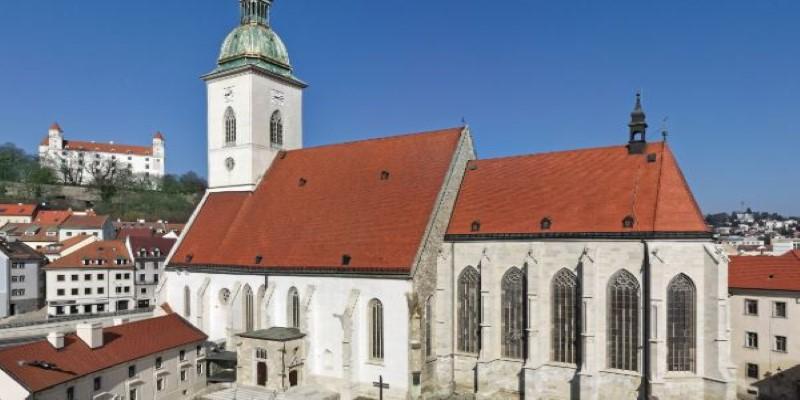
You have two ways to get up there, and both have specific quirks. The "romantic" way is walking up from St. Martin’s Cathedral. You will likely take Beblavého Street. It is picturesque, lined with small wine bars and cafes that look inviting. But here is the reality check: the cobblestones here are old, polished by millions of feet, and incredibly slick. If it has rained even a little, you need grip. I have seen plenty of people in flat-soled city sneakers sliding around near the "U Čerta" pub.
If you want to save your legs, you take the trolleybus. The standard advice in every guidebook for the last decade has been "take the 203 or 207." However, Bratislava’s transport authority loves to tweak routes. While the 203/207 remains the legendary advice, you might find yourself looking at a digital board for line 44 or 47 depending on the current schedule shifts. Don’t panic if the number isn’t 203; just look for "Hrad" or "Búdková" on the destination sign. The bus drops you near the Parliament building, and you walk down into the castle complex. It is a much smarter play, especially in July.
The Museum Reality: It’s Not a Royal Palace
Once you pass through the Vienna Gate, you enter the Yard of Honor. It is vast, white, and blindingly bright on a sunny day. Bring sunglasses.
Inside the castle itself is the Museum of History. This is where many visitors feel a bit confused. You aren’t walking into a preserved 18th-century royal residence with made beds and set dining tables. You are walking into a museum space with white walls and glass cases. The exhibits focus on the long, often turbulent history of the Slovak territory.
The Crown Tower is the exception. It is the one part of the castle that survived the massive 1811 fire and dates back to the 13th century. It feels older. It smells older. The climb up the tower stairs is tight, but the view through the small windows frames the Old Town perfectly.
The real highlight, which is easy to miss if you aren't paying attention to the signage, is the Treasury in the basement. It houses gold and silver work from the region's history. More importantly for summer visitors: it is the coolest place in the entire complex. The temperature drops significantly down there. If you have been roasting in the courtyard, the Treasury is a legitimate survival strategy.
The Wind Tunnel and The UFO
The terrace overlooking the river is the reason you came. The geography of the Danube valley creates a natural funnel here. Even on a stagnant, hot day in the city center below, the wind on the castle terrace can be surprisingly strong. It whips hair into faces and knocks over empty plastic cups.
The view is a study in contrasts. Directly below you is the intricate tile work of the Old Town roofs. Immediately across the river is the concrete sprawl of Petržalka, the massive socialist-era housing estate. Connecting them is the Bridge of the Slovak National Uprising, or the UFO Bridge. Seeing the flying-saucer-shaped restaurant hovering over the river from this angle is jarring and fantastic.
If you look further west, past the bridge, you aren't just looking at the horizon; you are looking at Austria. On a clear day, you can count the wind turbines spinning in the fields of Burgenland. It is one of the few capital city castles where you can physically see the border of another nation with the naked eye.
The Baroque Garden: Look But Don’t Touch
Behind the massive castle building lies the Baroque Garden. This is a reconstruction based on plans from the time of Maria Theresa. It is rigorous and geometric. The paths are white gravel, the trees are in planters, and the lines are perfect.
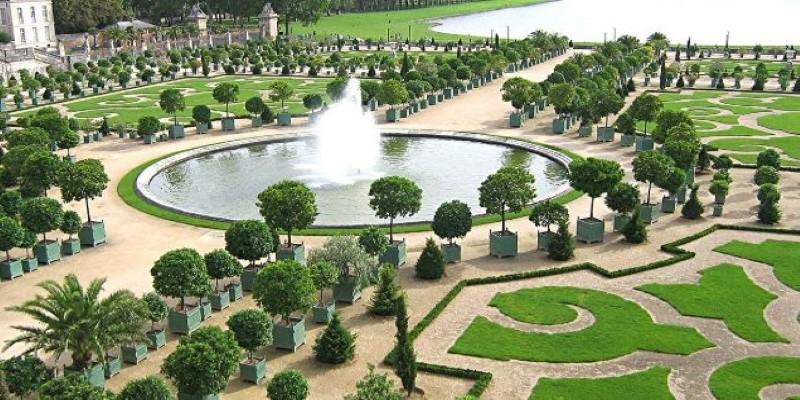
It is also strictly managed. There are guards, and they will whistle at you if you step on the grass. This isn't a park for a picnic; it's a visual exhibit.
One crucial detail for winter travelers: this garden often closes or has restricted hours during the colder months (roughly November to March), especially if there is snow or ice. The white gravel turns into a slushy mess, and they simply lock the gates. If seeing the garden is a dealbreaker for you, don’t book a trip in February.
Strategic Views and Connecting to the City
The primary reason many tourists make the trek is the view. The terrace overlooking the Danube offers a panoramic sweep that explains the strategic importance of Bratislava. You can see three countries from here on a clear day. Austria lies to the west. The wind turbines of Burgenland are visible on the horizon. Hungary is to the south.
After the visit, the descent leads you back toward the Old Town. A smart itinerary connects the castle visit with a walk through the Jewish Quarter remnants on the way down. The path leads past the House of the Good Shepherd, which is home to the Museum of Clocks. This route deposits you directly onto Židovská street. This is far more efficient than backtracking to the main square. It allows for a natural transition from the high fortress to the narrow, medieval streets below.
Conclusion
Visiting Bratislava Castle is a foundational part of any Slovakian itinerary. It anchors the city. It provides context for the history of the region. The experience requires managing physical exertion and timing to avoid the heaviest crowds. The reward is a comprehensive understanding of the city's layout and history.
The castle is not just a backdrop for selfies. It is a functional museum complex that demands a few hours of attention. Treat the visit as a mix of hiking, history lesson, and landscape viewing. Do this, and the climb up the hill becomes a highlight rather than a chore. Go for the view of the UFO bridge, stay for the cool air in the Treasury basement, and check the bus app before you wait for a trolleybus that might have changed its number.